
Kentucky Parole Board Hearings
The Kentucky Parole Board decides whether an eligible person may leave a state sentence before its expiration under conditions. Parole is discretionary. It is not a pardon, a reduction of the sentence, or a finding that the sentence has ended. Current KRS 439.340 gives the Board authority over eligible state prisoners and certain sentenced felons held in county jails. The Board's hearing process sits between sentence administration and a possible release, but a hearing date alone changes no custody status.
A recommendation also is not the physical release event. Under Kentucky Parole Board policy KYPB 10-01, a proposed placement must be approved, the parole certificate must be signed, and the person must actually depart custody. The Board may rescind its recommendation before departure. For that reason, the schedule answers when review may occur, the decision answers what the Board did, and the custody record answers whether release took place.
The official Kentucky hearing schedule displays the current calendar and eligibility material.
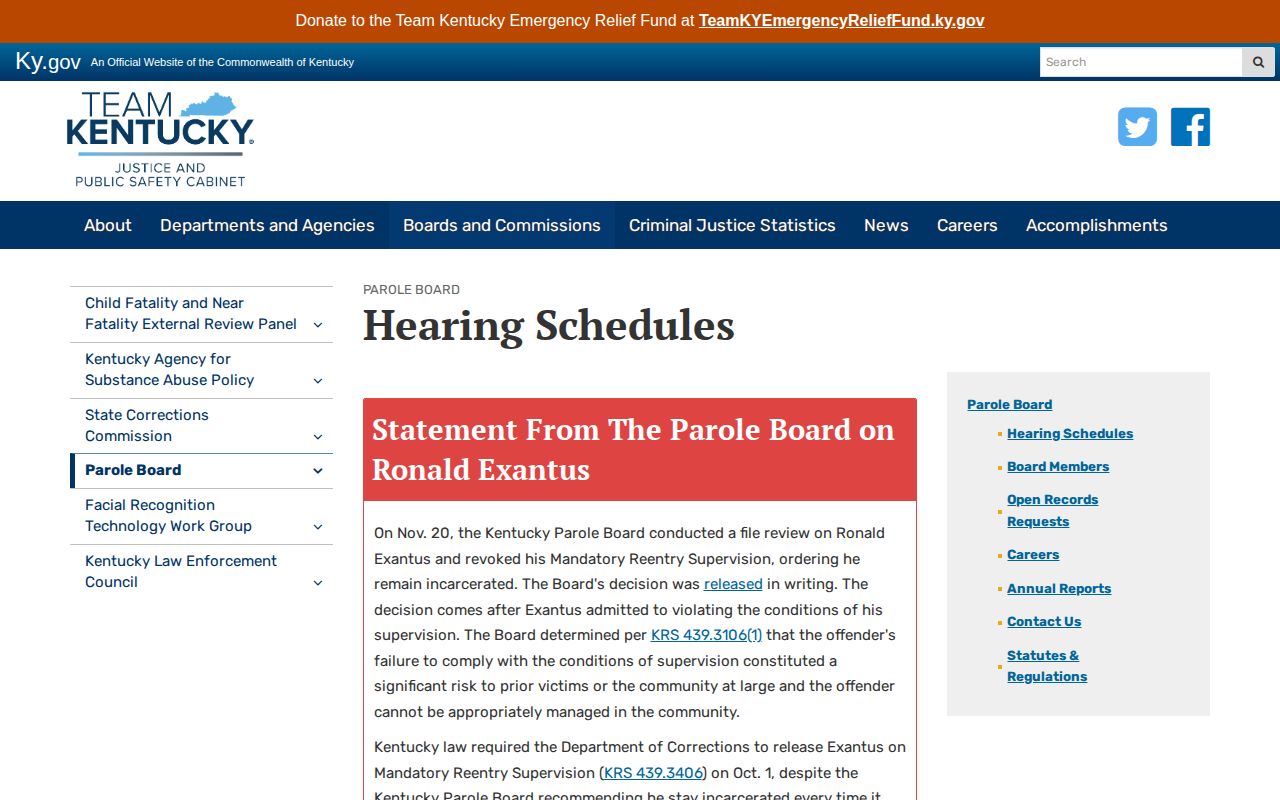
Its calendar should be checked again near the expected date because the Board updates the schedule on a rolling basis.
Find a Kentucky Hearing Date
Parole Eligibility Hearings are held weekly and begin at 8:30 a.m. Eastern. The Board says its schedule is updated each Monday morning. Monthly calendar files organize scheduled work, while a separate monthly eligibility list gives the offender's name, DOC number, location, and eligibility month. A hearing may take place as much as two months before the actual eligibility date. That early timing does not advance the legal eligibility date or prove the Board will approve release.
Use the current links on the schedule page rather than saving an old monthly PDF. The Board posts rolling documents, so an older calendar can remain accessible after it stops being the best source. A DOC number is the strongest match when names are alike.
- Open the Board's schedule page and note the date it was last reviewed.
- Select the current monthly eligibility list and look for the full name or DOC number.
- Match the listed institution and eligibility month to the person's corrections record.
- Open the current monthly hearing calendar and locate the institution, date, or hearing group.
- Recheck after the Monday update because a scheduled matter can move.
Note: Eligibility-list placement means Board review is nearing; it does not mean parole was recommended, granted, or carried out.
Observe Kentucky Parole Hearings
The public may observe parole hearings in person or by videoconference. File reviews are not open for public observation. To request videoconference access, contact the Board at Paroleboard@ky.gov. For in-person observation, contact the institution where the hearing will occur. Observation means watching the proceeding; it does not give an observer a role to speak during it.
Schedules and access arrangements serve different purposes. First confirm the correct hearing and institution. Then make the observation request through the channel the Board identifies. A calendar can change, and an institution may need enough lead time to handle access. The public schedule remains the best source for the current event, while the Board or institution supplies the practical observation instructions.
Find Kentucky Parole Decisions
Kentucky does not provide one public, searchable database containing every Parole Board result. A person-specific result may appear in the parole-information table within the KDOC offender search. That table can show a hearing date, hearing action, months deferred, next eligibility date, and proposed release date. Read the current custody or supervision status as well. A proposed date is not the same as actual departure.
The official written order is obtained from the Board. A public example form shows the types of facts a decision can contain, including identity, DOC number, institution, review date, eligibility, denial, deferment or serve-out language, reasons, and remarks. The example is not a results index and should never be treated as a record about someone else.
- Match the person in KOOL by DOC or PID number, not by name alone.
- Read the parole table for the hearing date, action, deferment period, and any proposed date.
- Compare that entry with the present custody or community-supervision status.
- If the exact written disposition is needed, use the Board's open-records request route.
- After a suspected release, corroborate it with an actual dated KDOC release report.
The KDOC Daily Releases archive provides dated reports of completed KDOC-controlled release events.
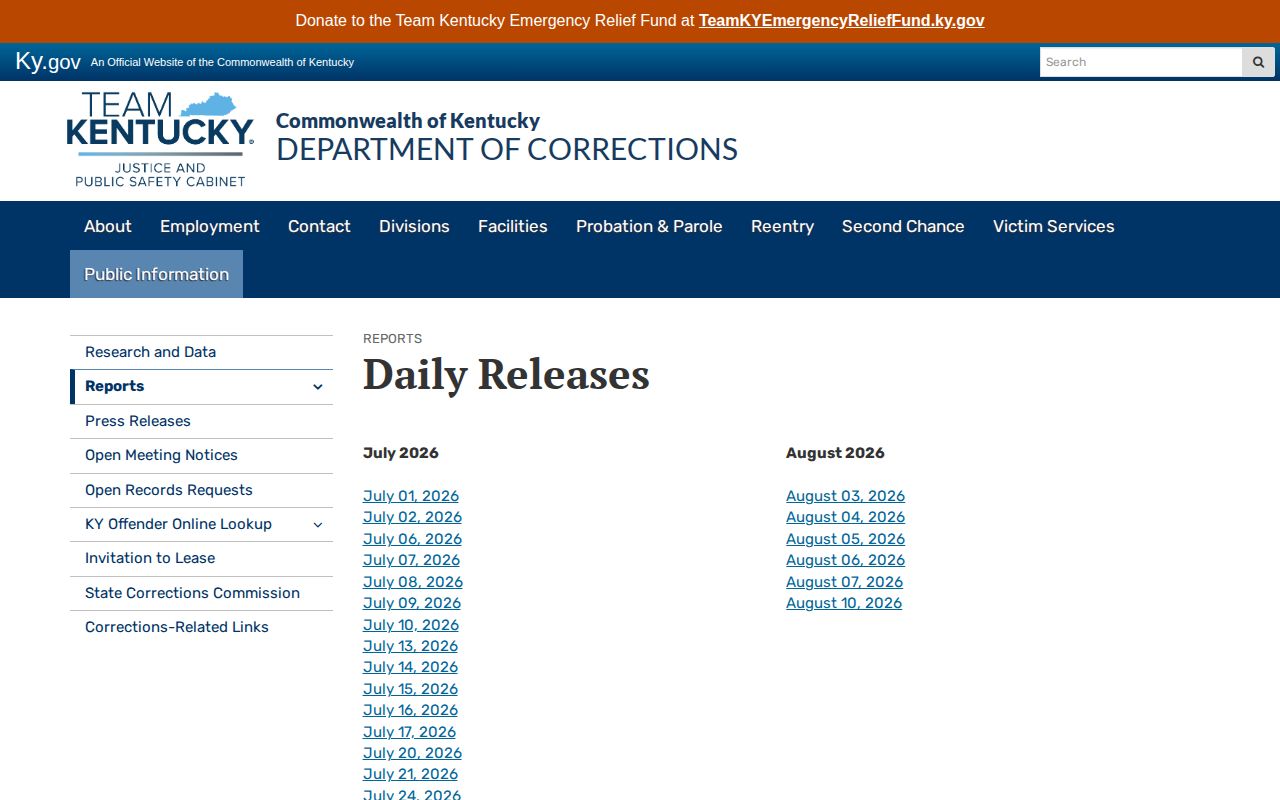
Those reports can corroborate the event, release type, and released-from location, but they do not cover every local jail release.
Kentucky Hearing Outcome Terms
Board terms describe legal steps with distinct effects. Under 501 KAR 1:030, a parole recommendation means the Board decided the inmate may be released before expiration. The word may matters. Placement approval, a signed certificate, and actual departure still separate the recommendation from release.
| Outcome | Meaning | What follows |
|---|---|---|
| Parole recommendation | The Board approves a conditional early-release path. | Placement, certificate, and physical-release steps remain. |
| Deferment | The Board states a number of months before reconsideration. | Check the next eligibility entry and later calendar. |
| Serve-out or SOT | The person is to serve through sentence completion. | Another lawful release route may still apply under separate authority. |
| Rescission | A prior favorable action is withdrawn before release. | Custody continues unless another release authority applies. |
| Revocation | Parole is withdrawn after an alleged or established violation process. | The Board record and current KDOC status must be read together. |
“Denied” may be reflected through a deferment or serve-out disposition. Exact wording matters because those results create different next steps. None should be compressed into a bare yes-or-no label when the Board record supplies more detail.
Kentucky Parole Eligibility Rules
There is no safe single percentage for every Kentucky parole case. Eligibility can turn on the felony date, offense classification, aggregate sentence, violent-offender status, and special statutory rules. The schedules within 501 KAR 1:030 vary by sentence and offense date. Current KRS 439.3401 also imposes distinct requirements on violent offenders. A monthly eligibility entry is therefore a stronger person-specific lead than an informal calculation.
Eligibility is permission to be considered. It is not a promise of a hearing result. Likewise, a hearing recommendation does not fix a guaranteed exit time. Detainers can direct a person from Kentucky custody to another authority, and release processing can remain incomplete after the Board acts. For supervision after actual departure, the statewide Parole & Probation page explains how a P&P district and supervision dates appear.
- Eligibility date
- The date or month when a person may qualify for Board consideration.
- Parole
- Conditional release before sentence expiration under Board authority.
- Detainer
- A request or legal hold from another authority that may receive the person.
- Final discharge
- A later legal endpoint, not the day a person leaves prison on parole.
Note: Always use the current statute and person-specific record because offense dates and sentence rules can change the eligibility analysis.
Parole Denial and MRS Release
A Kentucky parole denial can coexist with a later release under Mandatory Reentry Supervision, often called MRS. This is the distinctive point in Kentucky's release framework. Current KRS 439.3406 generally creates a supervised-release route before projected completion for a qualifying inmate who was not granted discretionary parole, subject to stated exclusions. MRS is legally treated as release on parole for its statutory operation, but it is not a discretionary Parole Board grant.
The Board schedule itself explains this difference because users may see a parole denial and later find an MRS release without any conflict between the records. Describe the mechanism by name. “Released on supervision” is accurate at a broad level, while “parole granted” is not accurate when the record says Mandatory Reentry Supervision. KOOL may label the status as MRS and show “Released To Other Agency (Probation & Parole).” That phrasing proves a move out of imprisonment into the stated arrangement, not final discharge.
The official KOOL gateway warns readers to account for data freshness and source limits.
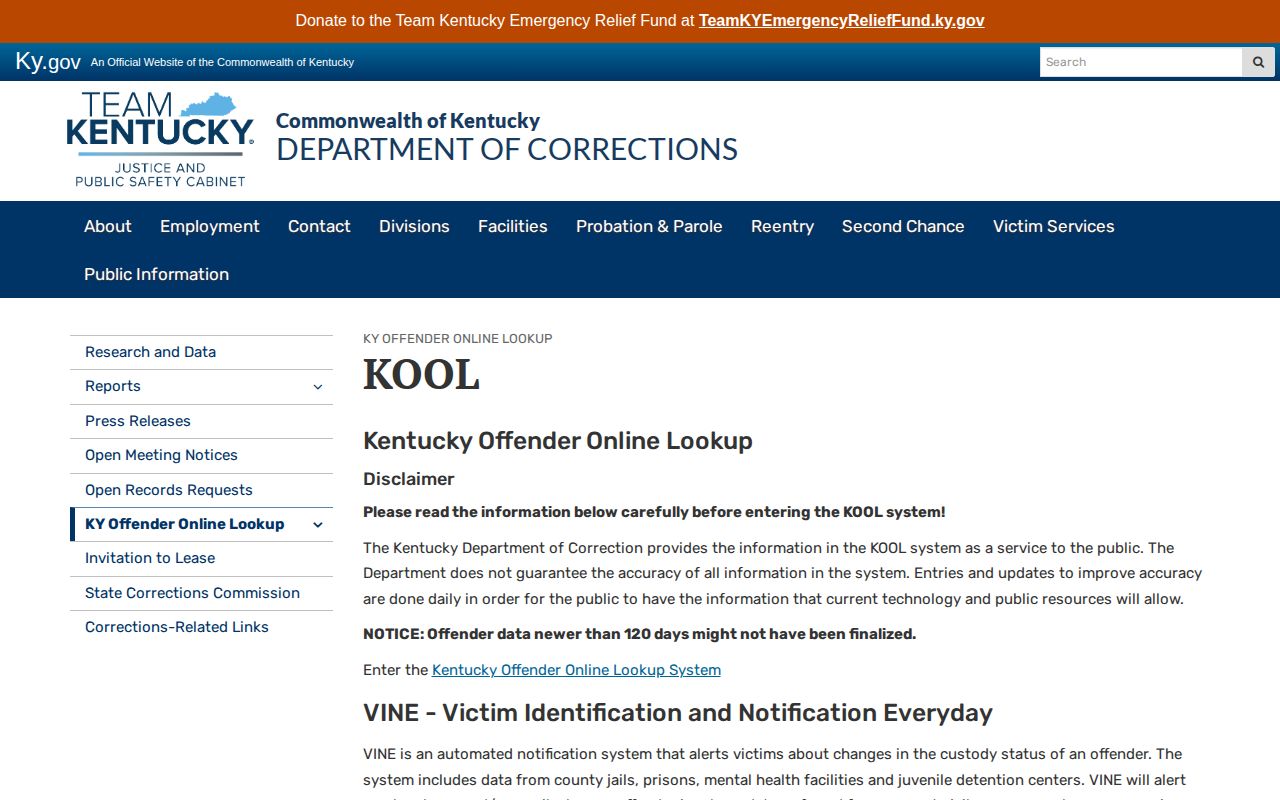
Use KOOL to match the current status, then use the dated release record when the exact departure event is the issue.
Kentucky Decision Reconsideration
KYPB 10-00 allows limited reconsideration of a deferment, serve-out, revocation, or rescission. A request generally must be postmarked within 21 days after the final disposition becomes available. It is not a broad rehearing based only on disagreement. The listed grounds are substantiated Board-member misconduct, a significant procedural error, or significant new evidence that was unavailable at the hearing.
The final disposition date matters because it starts the stated request window. Keep proof of when the result became available and when the request was mailed. A person seeking the exact order should obtain the written Board record first, then compare the requested ground with the policy. The Board's record, not a short KOOL label, provides the best basis for understanding what was decided.
Reconsideration also differs from a routine records request. The request for reconsideration asks the Board to review a qualifying final action on one of the narrow policy grounds. An open-records request asks the custodian to provide an existing public record. Requesting the decision does not extend the stated reconsideration deadline, so a person relying on that process should keep both functions clear and act from the final disposition date identified by Board policy.
The KDOC records-request page illustrates the separate route for corrections records rather than Parole Board decisions.
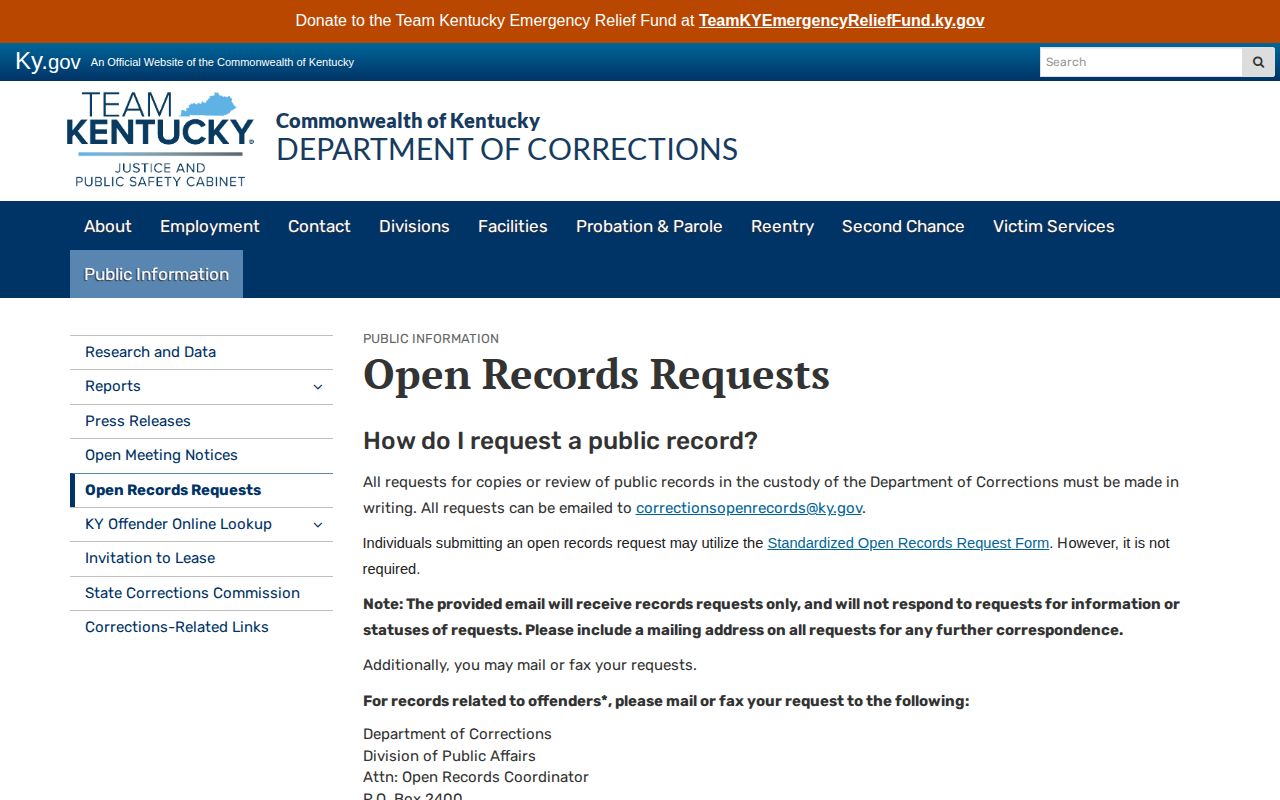
Send a decision request to the Board's own open-records channel; use KDOC's channel for custody, movement, and offender records.
Kentucky Parole Record Layers
No single Kentucky record answers every question about a parole case. The eligibility list identifies people nearing consideration. The monthly calendar supplies the hearing setting. A Board decision records the action taken. KOOL may summarize parole action and current status. Finally, the KDOC movement entry or Daily Releases report can document the completed custody exit. These records should line up, but they do not all describe the same point in time.
When two sources appear to conflict, compare their dates and labels before deciding that one is wrong. A calendar can precede eligibility. A recommendation can precede placement approval. A proposed release date can precede actual release. A person can then enter active supervision and later inactive supervision before any final discharge. That sequence explains why a past hearing date or past supervision end date cannot stand alone as proof that every part of the sentence has ended.
A local jail roster adds another limit. Some sentenced state offenders remain physically in county jails, while people released from a local misdemeanor or pretrial case may never have a KDOC parole record. Identify whether the case is under state-sentence authority before using the Board calendar. County bond, dismissal, and local time-served releases belong with the local custodian and trial-court record, not a Kentucky parole hearing search.
Public Record Search
Sponsored Results