
Kentucky Released Inmate Records
“Released” describes the end of one authority's custody, not always a return to the community. A county jail may release a person on bond, after dismissal, for time served, under a court order, or to another agency. Kentucky Department of Corrections, or KDOC, may release a state prisoner on discretionary parole, Mandatory Reentry Supervision, or at an administrative or sentence endpoint. Federal and immigration custody follow separate systems. The record must name the custodian and the kind of exit before it can answer where the person went.
A missing current-roster entry proves only that the roster does not show the person now. Transfer to KDOC, another county, the Federal Bureau of Prisons, the U.S. Marshals Service, ICE, a hospital, or another authority remains possible. County movement logs can establish the operational date and time. A court order can explain the legal basis. KOOL, the Kentucky Offender Online Lookup, can show the state corrections status that follows a prison exit.
The official KOOL gateway states the scope and data warning visible in the statewide service.
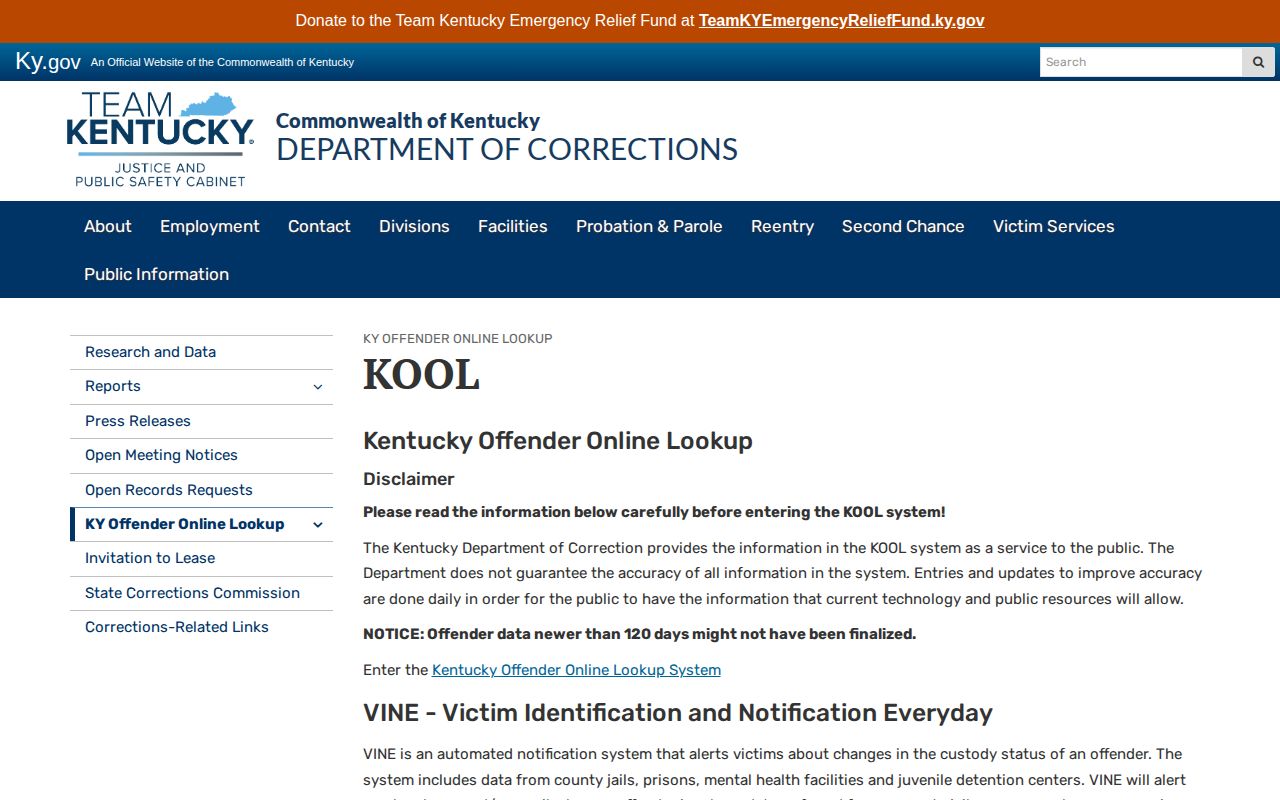
The gateway is the sound starting point for a state corrections case, but it does not replace a county record for a local-only release.
Kentucky Custody Release Types
Release labels have different legal effects. Parole permits an eligible person to leave confinement under conditions, but it does not reduce the sentence or act as a pardon. Mandatory Reentry Supervision, often called MRS, is a statutory supervised route for qualifying inmates who were not granted discretionary parole. Final discharge comes later and marks a stronger endpoint than the day a person walked out of prison. A transfer or detainer release ends one custodian's hold while another may take control.
| Release type | Meaning | Next record |
|---|---|---|
| Bond, dismissal, or time served | Local jail custody ends under a court or sentence event | County release entry and court order |
| Discretionary parole | Conditional state release after Board action and physical departure | KOOL parole table and Board record |
| Mandatory Reentry Supervision | Statutory supervised release distinct from a parole grant | KOOL status and supervision dates |
| Administrative or sentence release | KDOC-controlled exit tied to sentence computation | Daily Releases and movement record |
| Release to another agency | Custody changes hands | Receiving authority's system |
Physical departure matters. A Board recommendation alone is not release because placement must be approved, a certificate signed, and the person must leave. Likewise, a proposed parole date, good-time date, and maximum expiration date are not interchangeable with an actual release date.
Kentucky Release Record Fields
A useful release record ties identity, authority, time, and disposition together. County formats differ, yet a focused request can ask for existing fields rather than a new agency explanation. State records add PID and DOC identifiers, sentence calculations, supervision dates, and a Probation and Parole district. Each field answers one part of the event.
| Field | What it establishes |
|---|---|
| Full name and identifiers | The correct person, using DOB, booking, PID, or DOC number where held |
| Actual date and time | When the releasing agency ended custody |
| Release type | Bond, court order, parole, MRS, expiration, transfer, or other recorded basis |
| Released-from location | The facility responsible for the movement entry |
| Receiving authority | Whether another agency or detainer took custody |
| Supervision begin and end | The recorded community-supervision span, not necessarily final discharge |
The KDOC Daily Releases archive provides dated reports of actual state-controlled events.
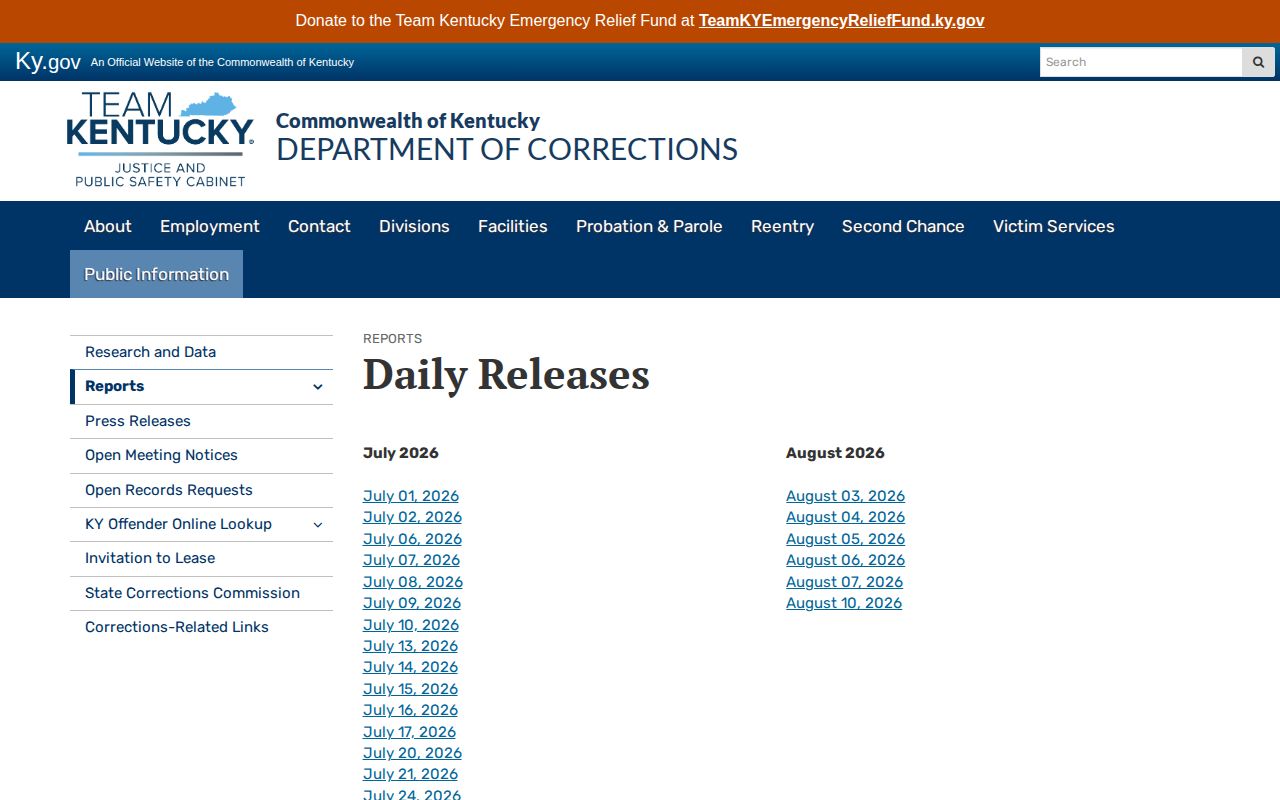
Those reports can corroborate a KOOL record around a likely date, though they do not include every local bond-out or dismissal.
Request Kentucky Release Records
Kentucky's Open Records Act generally permits a Commonwealth resident to apply in writing to the official custodian, subject to exemptions. Corrections records also face the security and offender-record limits in KRS 197.025. County-jail records must go to the local custodian. KDOC records must go to the department. Parole decisions use the Board's separate request route, and trial-court files belong with the circuit clerk in the county that handled the case.
- Identify the last facility, likely dates, full name, DOB, and any booking, PID, or DOC number.
- Ask the correct custodian for existing release or movement entries, not a new narrative or legal conclusion.
- Specify actual date and time, release type, released-from place, receiving agency, sentence computation, and supervision or final-discharge documents needed.
- For KDOC, send a written request with a mailing address to correctionsopenrecords@ky.gov or use the stated mail or fax route.
- Compare the returned movement record with KOOL, the relevant court order, and any receiving authority record.
KDOC lists ten cents for each released paper page, one dollar for a CD plus postage, and about $2.50 for a USB plus postage. It states a five-business-day response period under KRS 197.025. Mail for offender records goes to the Department of Corrections, Division of Public Affairs, Attn: Open Records Coordinator, PO Box 2400, Frankfort, KY 40602; fax 502-564-9575.
The KDOC open-records page shows the official written-request channels and current fee details.
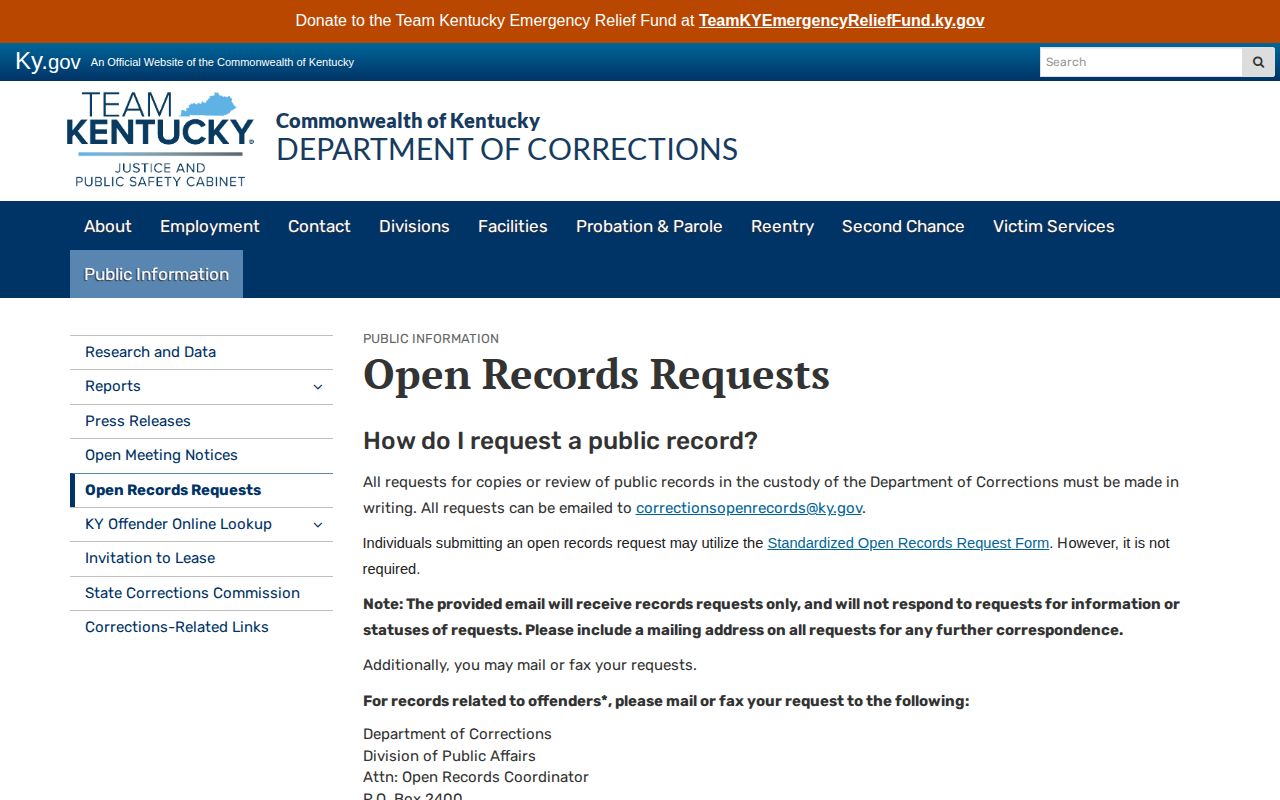
The standard form is optional, but the request must include enough facts for staff to locate the existing record.
Retention and access depend on the custodian. KDOC does not publish a fixed promise that every fully discharged person will remain searchable in KOOL, and its FAQ routes older incarceration questions to Offender Information Services. County and court files may remain with the local office, move to a records facility, or be destroyed under the schedule that governs that record series. A sealed or expunged case can restrict what a public search or request returns, but it does not authorize treating an absent result as proof that no custody event occurred. Ask the circuit clerk about the court file and the releasing custodian about its operational record.
Kentucky Prison Release Transportation
Kentucky law promises specific release-day help, but it does not promise cash gate money. KRS 197.180 requires serviceable seasonal clothing and state-paid, nontransferable transportation to a Kentucky county when a sentence terminates or a person leaves by pardon or parole. The destination is framed as a county within the state. Nothing in that provision supports inventing a cash amount or treating the ticket as transferable.
This detail can help interpret the logistics around a KDOC departure, but it does not prove the release itself. The Daily Releases report, KOOL status, and movement entry remain the evidence of the custody event. KDOC's 2024 annual report also says reentry coordinators worked in prisons, county jails, and Probation and Parole offices. During 2024 the department processed 2,585 state-ID applications across fourteen state prisons and twenty county or regional jails.
Release documentation is a separate part of the process. KRS 196.281 addresses documentation tied to release, while the transport benefit is set out in its own statute. Keeping those sources apart prevents a logistics provision from being treated as proof of status. The agency record should still identify the person, date, type of exit, and destination. If another agency received custody, the next check belongs with that agency.
Kentucky Inmate Release Trends
Official reports for fiscal year 2023 and fiscal year 2024 show 14,925 releases and 14,407 releases, respectively. That is a fall of 518 releases, or 3.5 percent. Over the same reports, average active Probation and Parole population rose from 48,811 to 49,378, an increase of 567, or 1.2 percent. A lower annual release count and a higher average supervision count can coexist because they measure different flows and time periods.
The Division's December 31, 2025 count was 46,358 active offenders. That point-in-time snapshot must not be compared as if it were the same measure as an annual average. It does show why a Kentucky released inmate search often moves from an institution record to a community-supervision status after prison exit.
The Kentucky Parole Board schedule shows the public calendar and eligibility-list route used before some releases.
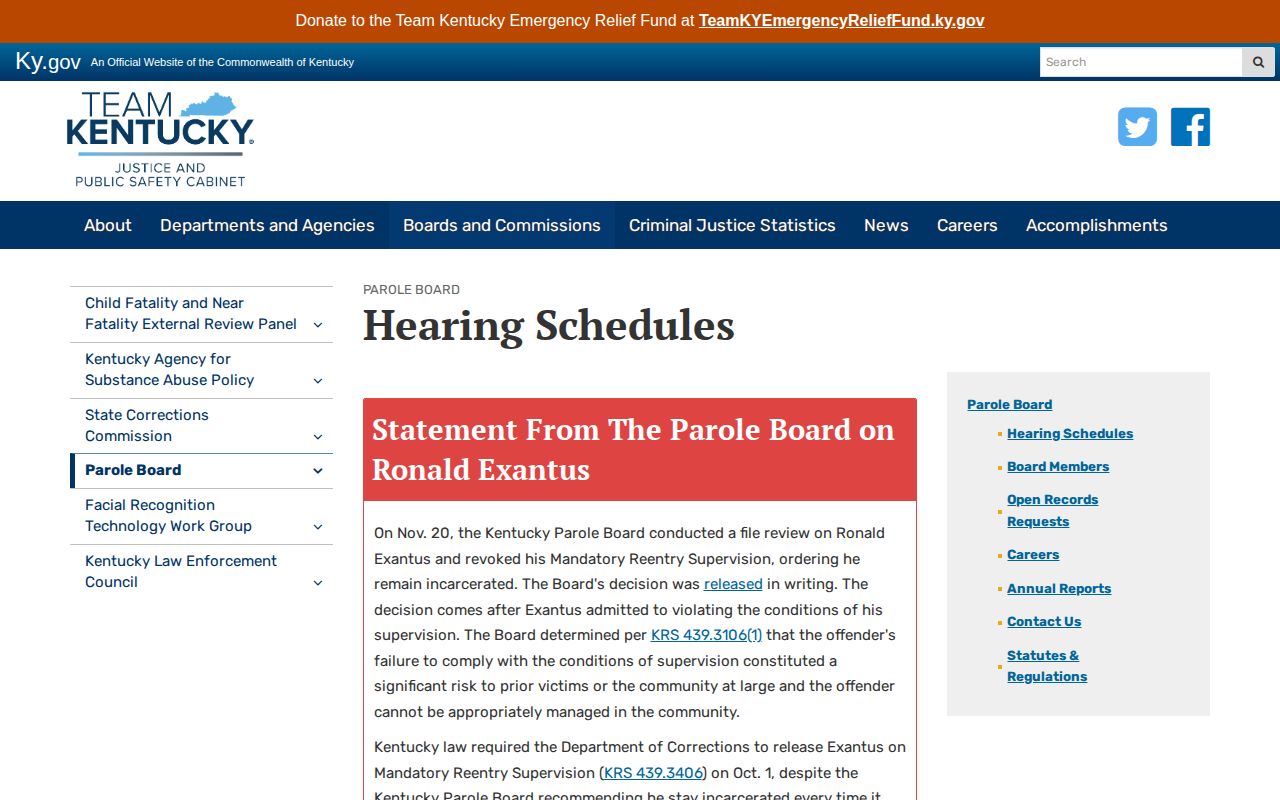
A place on a schedule means consideration is near. It does not mean parole was granted or that the person left custody.
Find Kentucky Released Inmates
A strong statewide search begins with custody level, not a broad name query. KOOL is central for a state felony or known DOC number. A county-only misdemeanor, pretrial detention, or local sentence may never become a KDOC case. Search broadly at first, then match the detail with identifiers, aliases, a photo if present, conviction county, and offense dates. Two records that agree are better than a person's mere disappearance from a roster.
- Identify the last known jail, prison, or federal or immigration authority.
- Check the current custody system and note the search time and exact wording.
- For a state case, search KOOL and check the Daily Releases report near the likely date.
- For a local case, obtain the county release entry and the court order behind bond, dismissal, probation, shock probation, or sentence completion.
- For federal or ICE custody, use the locator built for that authority and treat a no-result with care.
Key distinction: Leaving one roster may mean release, transfer, or a move to another custodian. Confirm both the release type and destination.
Kentucky Offender Search Fields
KOOL recommends a broad start, such as a surname and first initial, because too many criteria can hide a valid match. Its advanced form includes aliases, names, offender type, DOC and PID numbers, supervision status, location type and location, supervision county, physical traits, crime and KRS code, several event-date ranges, escape or abscond ranges, and projected release dates. The result list provides a name, current location, identifiers, broad offense-count groups, and a photo indicator.
| KOOL field | How to read it |
|---|---|
| Status and location | Read these before future dates; a P&P district is community supervision, not a prison |
| PID and DOC number | Use both to separate similar names |
| Supervision dates | Show the recorded supervision span, not automatic final discharge |
| Expected TTS and minimum expiration | Separate sentence calculations, not proof of actual departure |
| Parole table | May show hearing action, deferment, eligibility, and proposed release |
KDOC says KOOL refreshes four times daily and warns that material newer than 120 days may not be finalized. It makes no fixed public promise that every fully discharged historical person stays searchable forever. For old or conflicting data, use Offender Information Services or a records request. The focused KDOC offender search coverage explains those state fields in more depth.
Kentucky County Release Routes
Kentucky's 120 counties do not map neatly to 120 operating jails. Some run their own facilities. Others use regional detention in another physical county. A few local records preserve closed-jail history or route questions through a sheriff or jailer. Big Sandy, Kentucky River, and Three Forks regional facilities can appear in research for more than one county because they serve people beyond their physical location.
Start with the place that actually held the person. County of arrest may differ from jail location, court county, or the agency that recorded release. A state-sentenced person can also remain physically in a county jail while KDOC controls the sentence and reports the release. The Kentucky County Directory routes to each locality without assuming that one county owns every related record.
Kentucky Release Alerts and Federal Records
Kentucky VINE supplies custody status and notifications for a named person. Search a partial name or jail or DOC ID, select the right record, and choose “Notify Me of Status Changes.” A person may have both a DOC record and a local-jail VINE record, so Kentucky advises registration on both. VINE is an alert layer. Confirm its event with the agency that created the legal or custody record.
The Kentucky VINE information page describes statewide scope, phone registration, and notification methods.
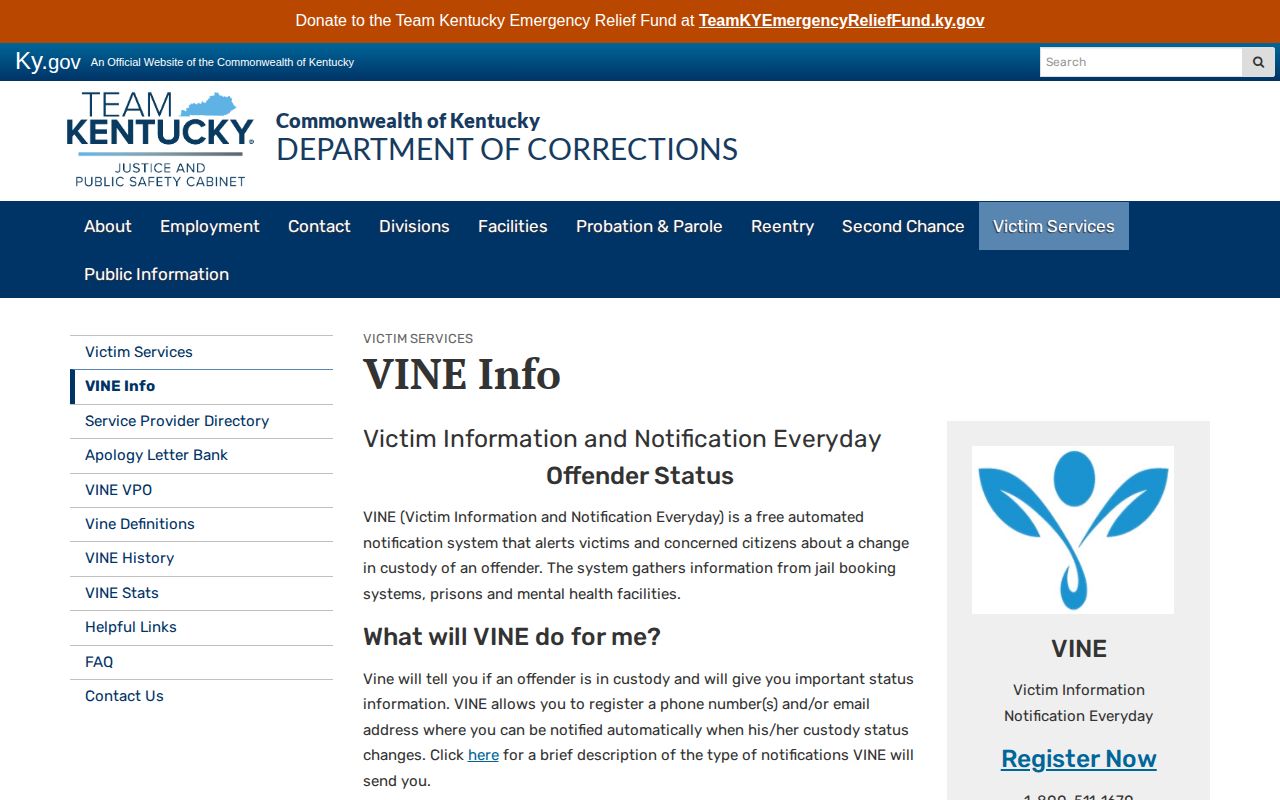
Kentucky no longer provides VINEcourt case registration, so custody alerts must not be mistaken for a universal court docket service.
The VINELink offender check presents the person search and notification flow after Kentucky is selected.
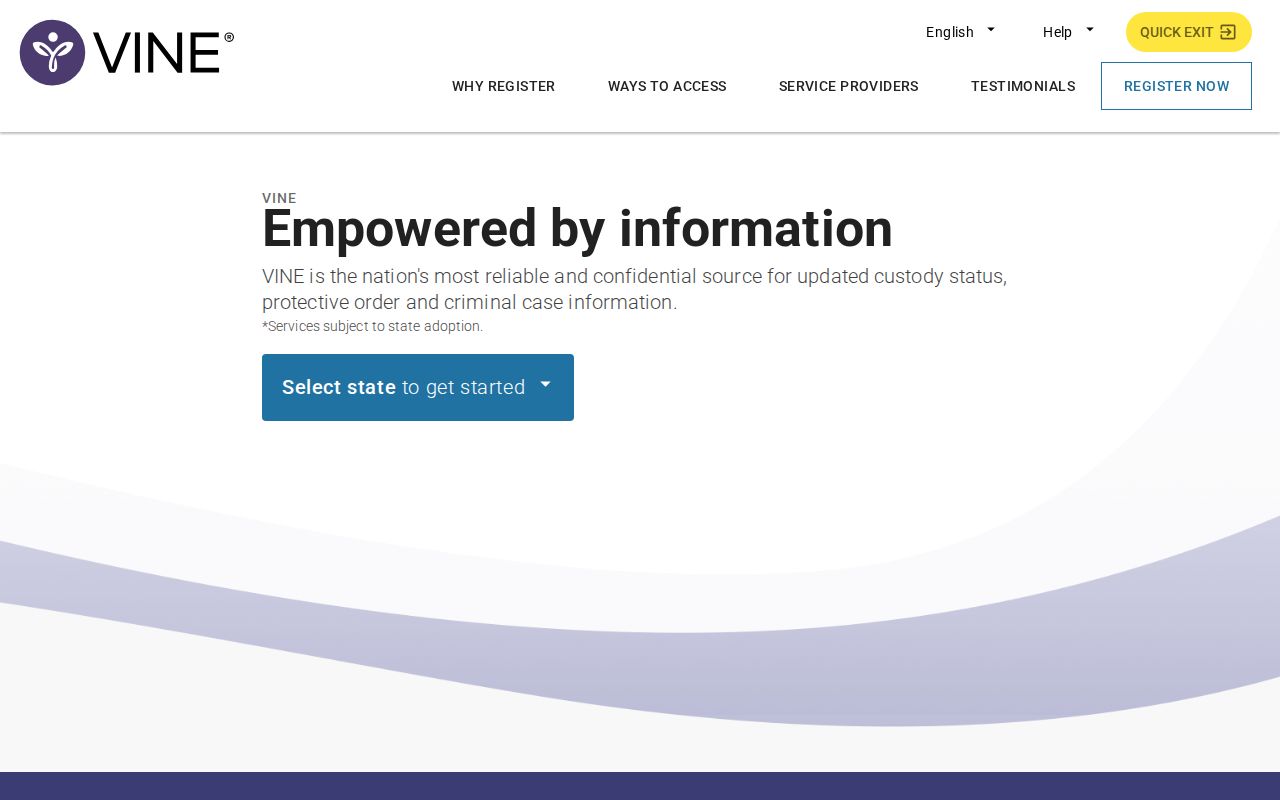
Phone enrollment uses a four-digit PIN, and the system can keep calling within a 24-hour window until the call is acknowledged.
Federal sentenced custody belongs in the BOP locator, which covers records from 1982 forward. A location of “RELEASED,” or a past release date with no facility, means the person is no longer in BOP custody. It does not rule out supervision or another authority. The BOP inmate locator accepts a federal number or name.
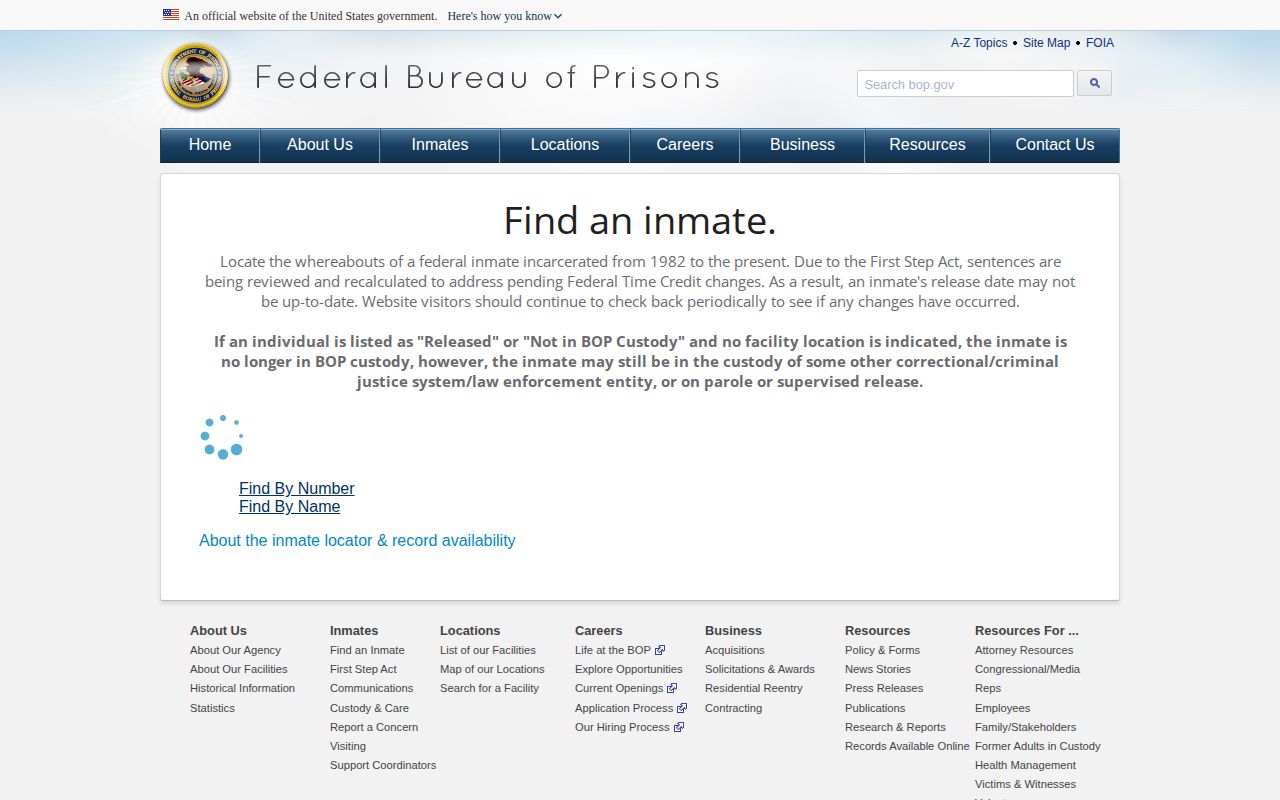
Pre-1982 federal records may require the National Archives, while a future BOP date remains projected and may change.
ICE uses a separate Online Detainee Locator System for a person in current ICE custody or held by Customs and Border Protection for more than 48 hours. The preferred search uses a nine-digit A-number, adding leading zeroes when needed, plus country of birth. A biographical name search is the other route. The locator cannot search for minors, and no result does not prove release or settle whether another authority has custody. An ICE match also is not a Kentucky criminal release record.
Kentucky Court Release Records
Kentucky has no single open public statewide trial-court disposition search comparable to KOOL. The Court of Justice directs Circuit, District, Family, and Business Court requests to the Office of Circuit Court Clerk in the county that handled the case. The Administrative Office of the Courts is not the custodian for those trial-court records, and appellate C-Track access does not replace the clerk route.
Older files may stay with the clerk, move to a records center, or be destroyed under the applicable schedule. A records-center retrieval needs case and file-locator numbers supplied by the clerk; the center cannot search by a person's name or Social Security number. The court order can establish why custody ended. A facility movement entry can establish when and from where it ended.
This split is useful when dates seem to conflict. A judge may sign an order before the jail completes its movement entry, and a later transfer can create a second custody event. Ask the clerk for the order and case number, then ask the facility for the matching release or transfer line. Neither document should be forced to answer the other's question.
The Kentucky Court of Justice record-request page explains the clerk-first process.
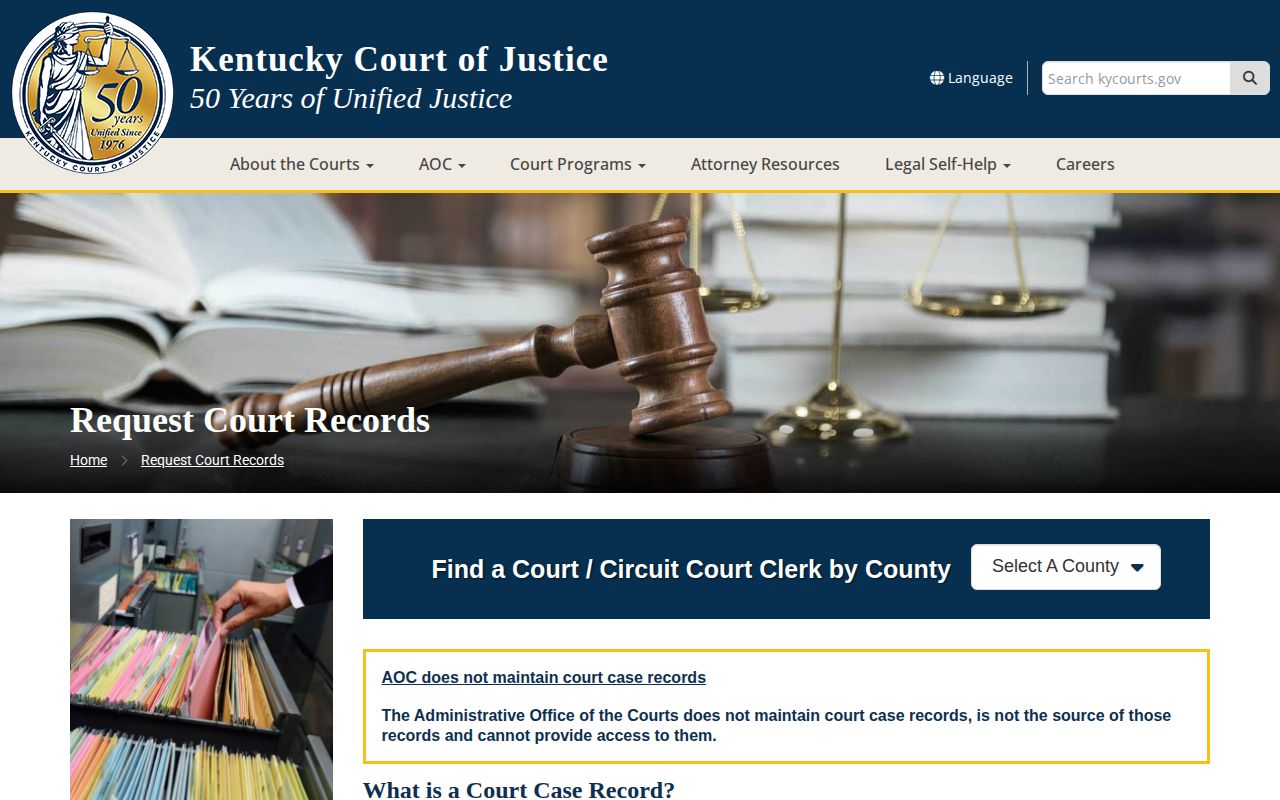
This local clerk structure is why one statewide search cannot settle every Kentucky release.
Kentucky Booking Photo Law
KRS 61.8746 addresses a narrow commercial practice. It prohibits using a booking photograph or official inmate photograph obtained from a public agency in a commercial publication or website when removal requires payment or other consideration. It does not create a blanket ban on every publication of a booking photo. The payment-for-removal trigger is the key limit.
A depicted person may seek an injunction or another Circuit Court order and may recover costs and reasonable attorney fees. The statute also permits escalating daily damages: at least $100 per day for the first thirty days, $250 per day for the next thirty, and $500 per day after that. Those remedies concern the prohibited business model. They do not erase the need to follow sealing, expungement, juvenile, and corrections-record restrictions that may apply to the source record.
Kentucky Custody Status Comparison
Each system answers a limited question. Read the authority label before treating any result as proof of community release. A current record can be delayed, and an old result can later be amended, sealed, expunged, or restricted.
| System | Best use | What absence means |
|---|---|---|
| County jail roster | Current local custody | Possible release or transfer, not proof |
| County release entry | Actual local movement and time | Ask the local custodian about retention |
| KOOL and Daily Releases | State sentence, supervision, and KDOC event | Not a universal arrest history |
| Kentucky VINE | Custody alerts for a matched record | Not a court disposition |
| BOP or ICE locator | That federal authority's custody | Not universal release proof |
For a disputed date or destination, request the operational release or movement entry. For the legal basis, obtain the court or Board order. Final discharge after parole is best shown by the Board-issued certificate or direct Board confirmation, not by a past supervision end date alone.
KOOL's four-times-daily refresh does not remove the need for that check. KDOC warns that information from the latest 120 days may not yet be finalized, while also making no public promise that every fully discharged historical record stays online for a fixed term. A recent mismatch calls for patience and records review. An old no-result calls for Offender Information Services or the responsible custodian, not a claim that no record ever existed.